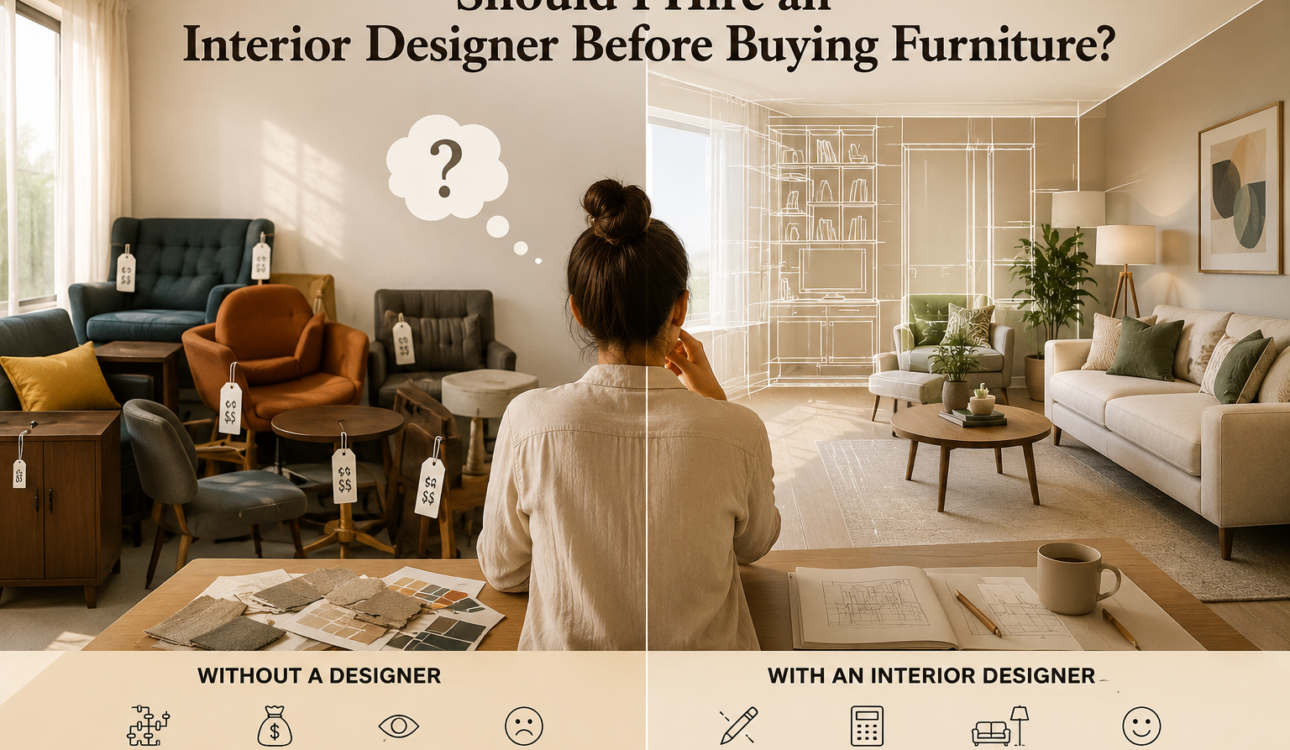
This question comes up almost every week during first consultations, usually from someone who has already spotted a sofa they like or has a wardrobe half-decided from a showroom visit. The honest answer is yes: hire the designer first, but it’s worth understanding why, because the reasoning isn’t just “designers know best.” It’s about sequence, and getting the sequence wrong is one of the most expensive mistakes homeowners in Kerala make when setting up a new flat or villa.
Why Furniture-First Backfires
Buying furniture before finalising the interior design plan puts the cart before the horse in a very literal way. A dining table bought because it looked good in a showroom might be 15 centimetres too wide for the space once the modular kitchen shutters, an AC unit, and a walking path are accounted for. A bedroom wardrobe picked off a catalogue might not match the door swing direction, the false ceiling height, or the electrical points already fixed on the wall. In apartment layouts across Kochi and Trivandrum, where every square foot genuinely counts, this kind of mismatch isn’t cosmetic it forces either a compromise on daily usability or a costly return and re-purchase.
An interior designer starts from the opposite direction. Before any furniture decision is made, the layout is measured, traffic flow is planned, electrical and plumbing points are marked, and only then does furniture selection happen, sized and styled to fit what’s actually possible in that room, not what looked good under showroom lighting.
The Budget Argument Nobody Talks About
There’s a common assumption that hiring a designer adds cost on top of furniture spending. In practice, it’s usually the opposite. Buying furniture piece by piece, reactively, tends to cost more overall because purchases aren’t optimised against each other you end up buying a standalone wardrobe, then a separate study table, then discover neither works with the bed frame you bought earlier, and end up adding a filler unit to tie it all together. A designer works from a single home interior design plan and budget from day one, which usually means custom-built, modular furniture that fits the space exactly, with materials chosen once rather than corrected halfway through.
This also applies to timeline. Fixing a furniture mismatch after the fact say, a wardrobe that blocks a window or a sofa that doesn’t leave enough walking clearance, often means unpicking work that’s already been carpentered, painted around, or electrically wired in. That’s lost time and lost money that a proper design-first sequence avoids entirely.
What a Designer Actually Plans Before Furniture Comes In
A good interior designer isn’t just picking colours and finishes. Before any furniture purchase is finalised, the process typically covers:
- Space planning — measuring the room, marking door swings, window placements, and identifying dead zones that furniture shouldn’t block.
- Electrical and plumbing coordination — deciding where switches, sockets, and light points go based on where furniture will actually sit, not the other way around.
- Material and finish continuity — making sure the wood tone, hardware finish, and upholstery colour of new furniture doesn’t clash with flooring, false ceiling, or existing fixed elements.
- Storage-to-usage mapping — sizing wardrobes, shoe units, and kitchen cabinetry to actual quantity of belongings rather than a generic showroom size.
- Budget sequencing — prioritising spend on pieces that are structurally important (modular kitchen, wardrobes) versus decorative pieces that can be added or upgraded later.
This is a very different starting point from browsing a furniture catalogue and picking what looks appealing.
When It’s Genuinely Fine to Buy Furniture First
To be fair, not every situation demands a designer before furniture. If you’re furnishing a single room with loose, freestanding pieces a study chair, a bookshelf, an accent lamp and the space isn’t going through any structural or layout change, buying independently is low-risk. Similarly, if you’re simply replacing a worn-out piece in an already-finished home, there’s no real reason to loop in a designer for that one item.
Where it consistently goes wrong is with full-home setups, new flat interiors, villa projects, or modular kitchen and wardrobe purchases anything involving custom carpentry, electrical planning, or a room being designed from scratch. In those cases, furniture bought ahead of the design plan almost always needs some kind of adjustment later.
The Kerala-Specific Angle
Local humidity and monsoon conditions add another layer to this. Furniture bought without design input often skips material considerations that matter here: WPC or marine ply for anything near a kitchen or bathroom wall, moisture-resistant finishes for wardrobes in ground-floor flats, or ventilation clearance behind wooden furniture to prevent dampness buildup. A designer familiar with Kerala’s climate factors this in at the material-selection stage, which is very different from a furniture salesperson optimising for showroom appeal.
The Practical Takeaway
If you’re setting up a new home or renovating significantly, get the design plan layout, electrical points, storage requirements, and style direction — locked in before a single piece of furniture is purchased. It costs nothing extra to sequence it this way, and it avoids the far more common and expensive alternative: furniture that technically fits in the room but never quite works the way it should.
Frequently Asked Questions
1. Does hiring an interior designer increase my overall project cost?
Not typically. Most homeowners end up spending less overall because a designer prevents duplicate or mismatched purchases and works within a defined budget from the start. You can review typical home interior design packages and pricing to get a sense of where costs fall for different home sizes.
2. How early should I contact a designer before or after I book my flat?
Ideally, as soon as you have the floor plan, even before possession. This gives enough lead time for space planning, material selection, and custom furniture design, so nothing is rushed once you get the keys.
3. Can I keep some of my existing furniture and still work with a designer?
Yes, most designers will happily plan around existing pieces you want to retain a family heirloom cabinet, for instance and build the rest of the layout, colour palette, and new furniture to complement it rather than replace it.
4. What’s the difference between buying ready-made furniture and custom, designer-planned furniture?
Ready-made furniture is built to standard sizes that may not match your room’s exact dimensions or storage needs. Custom furniture, planned as part of an interior design project, is sized and finished to fit the specific space, electrical points, and material requirements of your home.
5. Is it worth hiring a designer for just one room, like a kids’ room or home office? Yes, especially if the room involves built-in storage, a study unit, or custom carpentry. Even single-room projects benefit from proper space planning, and Atlas’s home interior services can be scoped for individual rooms, not just full-home projects.
6. Do interior designers in Kerala also help with modular kitchens and wardrobes, or just furniture styling? A full-service designer typically covers everything: modular kitchen layout, wardrobe design, furniture selection, and styling as one coordinated plan. Atlas’s modular kitchen design service, for instance, is planned alongside the rest of the home’s furniture and storage needs rather than as a separate purchase.