Designing a child’s room feels like it should be the fun part of a home project: bright colours, a theme, maybe a loft bed. But it’s actually one of the trickiest rooms to get right. Kids grow fast, their needs change every couple of years, and Kerala’s climate adds its own set of complications that don’t show up in the Pinterest boards everyone starts with. After sitting through enough client walkthroughs in Kochi and Trivandrum, the same handful of mistakes keep showing up some cosmetic, some genuinely costly to fix later. Here’s what to watch for.
1. Designing for the Child They Are Today, Not the Child They’ll Be in Three Years
This is the single most common misstep in kids room interior design. Parents walk in wanting a nursery, complete with a crib-height cot and pastel murals, without accounting for the fact that the child will outgrow that setup in under two years. A smarter approach is modular furniture: a cot that converts into a junior bed, a study table with an adjustable height, storage units that can be reconfigured as toys give way to books and then to a study setup. It costs a little more upfront but saves an entire renovation cycle down the line.
2. Ignoring Kerala’s Humidity When Choosing Materials
This one is specific to our climate and gets overlooked constantly. Kids’ rooms tend to use a lot of MDF and particleboard for budget furniture, bunk beds, toy chests, low tables and in Kerala’s humidity, especially during the monsoon months, these materials swell, warp, and develop a musty smell faster than most parents expect. WPC (wood-polymer composite) holds up far better in moisture-heavy environments and is worth the marginal cost increase for anything load-bearing or close to the floor. Solid wood or plywood with a good laminate finish is the safer bet for wardrobes and bed frames if budget allows.
3. Overdoing the Theme
A jungle mural, dinosaur wallpaper, superhero bedding, and matching curtains all in the same room is a lot. Kids’ tastes shift quickly; the child who loved trains at four may find it embarrassing at nine. The better strategy is to keep the architecture and larger elements (walls, flooring, built-in storage) neutral, and let the theme live in easily replaceable pieces: cushions, a single accent wall, artwork, bedsheets. This is also more cost-effective for parents who don’t want to repaint or reupholster every few years.
4. Skimping on Storage or Making It Inaccessible
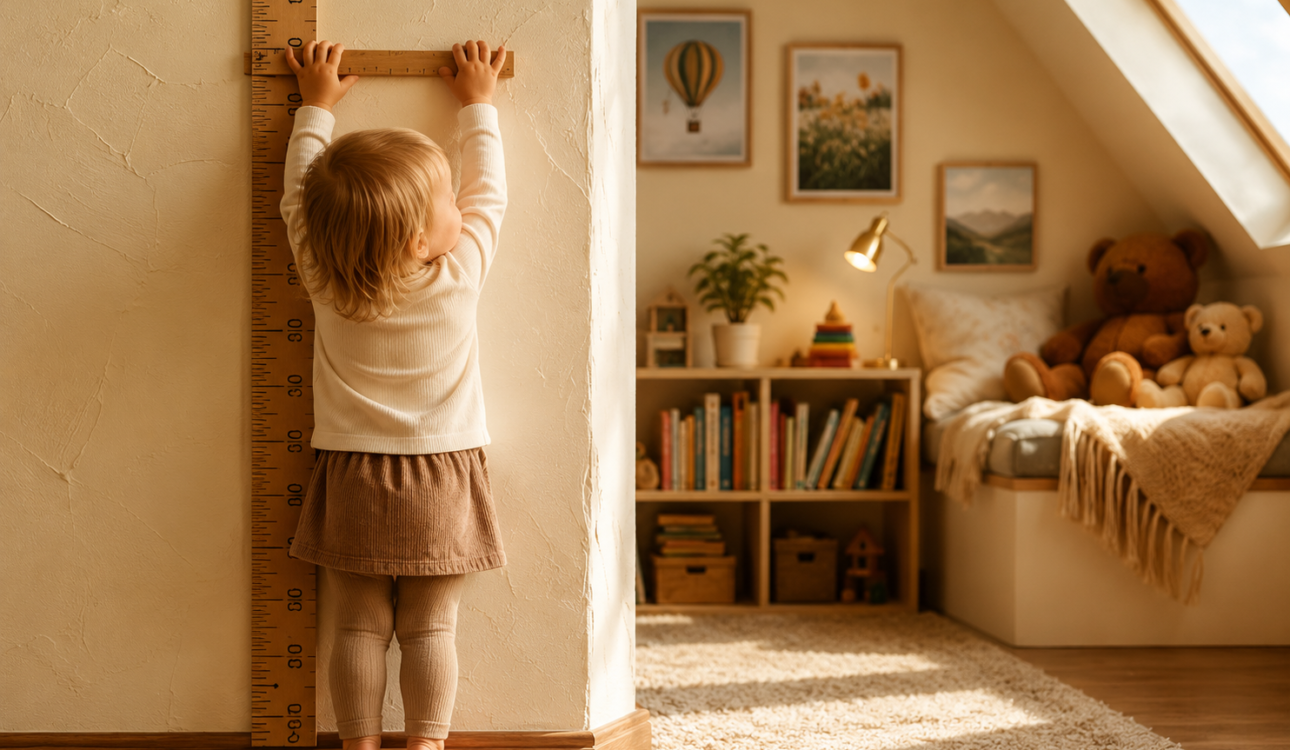
Two versions of this mistake show up repeatedly. The first is simply under-planning storage capacity, which leads to toys and books piling up on the floor within a month of move-in. The second, less obvious mistake is building storage that’s too high or too deep for a child to use independently, which means it becomes the parent’s job to tidy every day instead of teaching the child to do it themselves. Low, open shelving for everyday toys, combined with higher closed storage for things used less often, works well. Pull-out drawers under the bed are also a smart use of space in smaller flats around Kakkanad and Vattiyoorkavu, where kids’ rooms are rarely oversized.
5. Poor Ventilation and Lighting Choices
A lot of kids’ rooms in apartment layouts end up as the smallest bedroom, often with a single window and limited cross-ventilation. Compounding this with heavy curtains, dark paint, or over-furnishing makes the room feel and function worse than it needs to. Light, breathable fabrics for curtains, a ceiling fan sized appropriately for the room, and a paint palette that reflects rather than absorbs light all matter more in a humid coastal climate than in drier parts of the country. On lighting, avoid relying on a single harsh overhead fixture; a mix of ambient and task lighting near the study area supports both play and schoolwork without straining the child’s eyes.
6. Forgetting Safety at Furniture-Selection Stage, Not After
Rounded edges, non-toxic paint, and secured wall-mounted shelving should be decided at the design stage, not retrofitted after an accident. Cheap laminate finishes sometimes use adhesives with strong VOC off-gassing, which is worth asking about specifically when sourcing furniture, especially for a room where a child spends eight-plus hours a night. Anchoring tall wardrobes to the wall is a simple, often-skipped step that matters a great deal once a child starts climbing on furniture, which they will.
7. Not Involving the Child at All
For kids old enough to have an opinion, generally from around age six or seven, leaving them out of every decision often backfires. It doesn’t mean handing over the whole design; it means giving them a say in one or two elements, like a paint colour from a shortlist or where their reading corner goes. Rooms designed this way tend to get used and respected far more than rooms imposed entirely from the outside.
Getting a kids’ room right isn’t about following a trend; it’s about building something flexible enough to grow with the child while staying practical for Kerala’s climate and the realities of apartment-sized homes. A little restraint at the design stage, particularly around materials and theming, pays off far more than an elaborate first draft ever does.
Frequently Asked Questions
1. What is the ideal age to redesign a child’s room as they grow older?
Most designers recommend planning for a redesign roughly every 4–5 years once around age 6–7 when a nursery transitions to a “big kid” room, and again around age 11–12 when the space needs to shift toward a study-focused layout. Choosing modular furniture upfront reduces the cost of these transitions significantly.
2. Which materials are best for kids’ furniture in Kerala’s humid climate?
WPC and marine-grade plywood handle Kerala’s humidity far better than standard MDF or particleboard, which tend to swell or warp within a couple of monsoon seasons. For budget-conscious projects, at minimum use a BWP (boiling water proof) grade plywood for anything touching the floor.
3. How much should I budget for a basic kids’ room interior in Kochi or Trivandrum?
A functional kids’ room with a bed, wardrobe, study unit, and basic storage typically starts around ₹1.2–1.8 lakh for mid-range materials, and can go upward of ₹2.5 lakh with WPC furniture, custom loft beds, or built-in storage walls. Costs vary depending on room size and finish quality. You can check current home interior design packages or get a specific quote for your city, including Trivandrum.
4. Is it safe to use dark colours or heavy curtains in a small kids’ room?
It’s not unsafe, but it’s not ideal either. Small kids’ rooms with limited ventilation benefit from lighter wall colours and breathable fabric curtains, which help the room feel larger and stay cooler, particularly relevant in Kerala’s warmer, more humid months.
5. Should I install a loft bed to save space in a small kids’ room?
Loft beds work well in compact apartments, particularly in areas like Kakkanad where flat sizes are tighter, but they’re best suited for children above 6 years old for safety reasons. Make sure the design includes secure railings and that the ladder or steps are firmly anchored.
6. How do I stop my child’s room from feeling outdated within a year or two?
Keep large, expensive elements flooring, wall colour, built-in furniture neutral and timeless, and let personality show through smaller, replaceable items like bedding, cushions, and wall art. This keeps the room feeling current without repeated renovation costs.