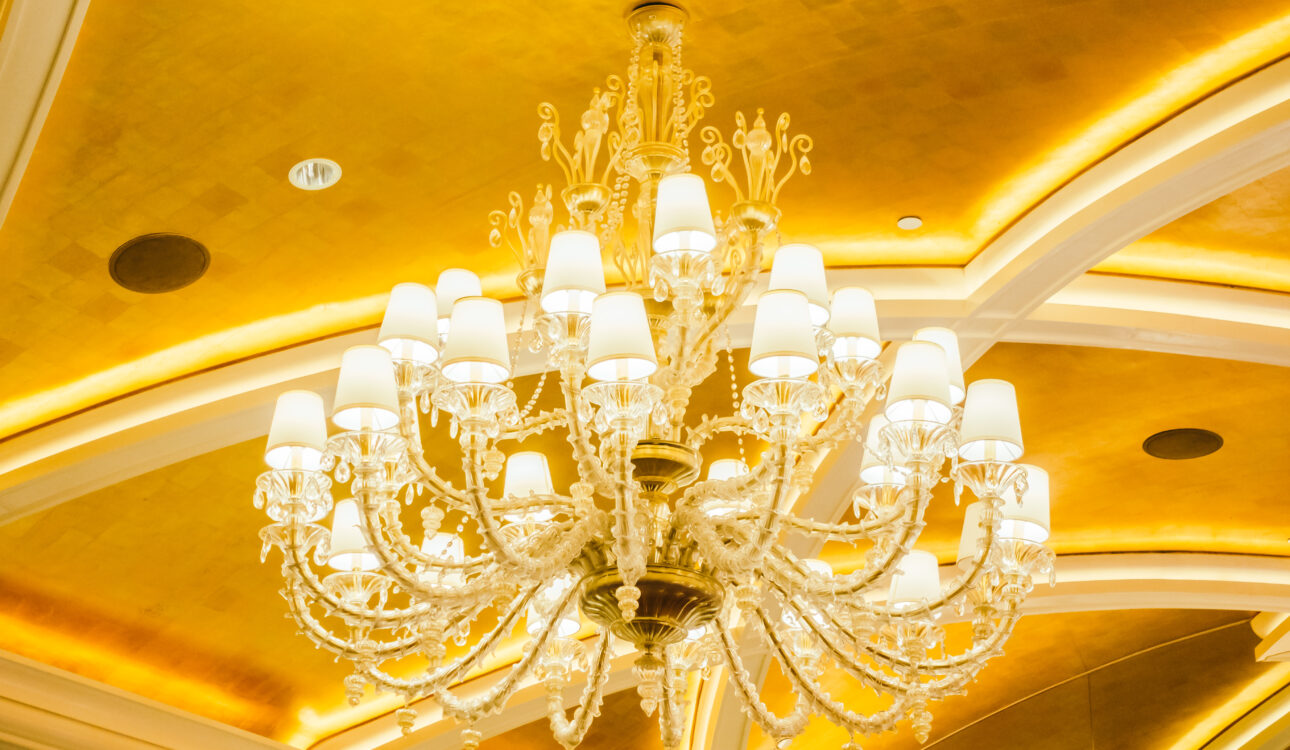
There’s a moment in every home renovation when the focus shifts upward, literally. The walls are sorted, the flooring is decided, and someone finally looks up and asks: “What do we do with the ceiling?”
In Kerala homes, that question carries a bit more weight than elsewhere. The climate is humid and warm for most of the year. The architecture often mixes traditional elements with contemporary aspirations. And the living room, the heart of the home, where guests are welcomed, and families gather, deserves a ceiling that earns its place rather than just closing off the room above.
False ceilings have moved far beyond being a builder’s finishing trick. Done well, they shape a room’s light, mood, proportions, and personality. Here’s a practical, honest guide to what actually works in Kerala homes in 2026.
Why False Ceilings Make Sense for Kerala Homes Specifically
Before getting into design options, it helps to understand why false ceilings are particularly well-suited to the Kerala context.
Most Kerala homes, whether apartments or independent villas, have slab heights between 10 and 12 feet. That’s generous, but it can make a room feel proportionally awkward without some visual treatment at the top. A false ceiling drops that perceived height to a more comfortable 9–9.5 feet, making the room feel contained and warm rather than cavernous.
More practically, Kerala’s humidity means wiring, plumbing, and AC ducting need to be hidden and protected. A false ceiling does exactly that while giving the space a cleaner, more finished look. And with energy-efficient LED lighting integrated into the design, a well-planned ceiling can significantly reduce the dependence on wall-mounted fixtures.
1. Cove Ceiling With Concealed LED Lighting
If you want one false ceiling idea that works reliably in almost every Kerala home, this is it. A cove ceiling creates a recessed perimeter, essentially a ledge around the edges of the ceiling where LED strip lights sit hidden. The light bounces upward and outward, giving the room an indirect, warm glow that no amount of overhead bulbs can replicate.
This is the dominant choice in false ceiling designs for living room Kerala projects right now, and for good reason. It works in compact flats, large villas, and everything in between. The cove can be a single tier or stepped into two levels for added depth. Keep the main ceiling flat and paint it a tone lighter than the walls; that simple move makes the room feel taller.
For bedrooms, cove lighting doubles as ambient lighting for evenings. Pair it with a dimmer switch, and you’ve built real functionality into the design.
2. Gypsum False Ceiling: The Evergreen Choice
Gypsum board remains the most widely used material for false ceilings across Kerala, and it’s earned that reputation. It’s lightweight, moisture-resistant when properly sealed, easy to work with, and relatively affordable compared to most alternatives. It can be cut into virtually any shape, painted in any colour, and finished smooth or with subtle texture.
For the best false ceiling design for hall applications, gypsum hits the sweet spot between cost, flexibility, and finish quality. A well-installed gypsum ceiling with clean lines and recessed lighting looks genuinely premium. A poorly installed one with visible joints and uneven paint will drag the entire room down.
The material isn’t the deciding factor; the craftsmanship is. Always ask a contractor to show you completed project photos, not just 3D renders.
3. Wooden Finish and Teak Panel Ceilings
Wood on the ceiling is having a long, well-deserved moment in kerala style home interior ceiling decoration. The warmth it brings to a room is something no painted gypsum surface can replicate; it changes the quality of light, adds texture, and gives the space an organic grounding that resonates deeply with Kerala’s architectural heritage.
In practical terms, you don’t need real teak planks across the entire ceiling; that would be expensive and structurally demanding. Instead, most contemporary projects use one of two approaches: engineered wood panels or WPC (Wood Plastic Composite) boards in wooden finishes that look authentic but handle humidity far better than solid timber.
A common application is the partial wood ceiling, a central wooden panel framed by gypsum on the perimeter with cove lighting. This gives you the warmth of wood without the full cost, and the cove lighting adds drama by casting light across the wood grain. In living rooms with high ceilings, this combination is particularly effective.
4. Stepped or Tray Ceilings for Visual Drama
A tray ceiling is exactly what it sounds like: the centre of the ceiling is raised (or appears raised) relative to the perimeter, creating a layered, dimensional effect when you look up. In a Kerala living room with adequate slab height, this is one of the most impactful ceiling treatments available.
Among modern false ceiling design ideas 2026, stepped and tray designs are gaining ground because they work with architectural depth rather than applying decoration over a flat surface. The layers can be finished in different colours, a darker inner tray against a lighter outer perimeter, for instance, to add contrast without any pattern or ornamentation.
Adding cove lighting between the tray levels creates a floating effect at night that looks genuinely sophisticated. This design works particularly well in dining areas and master bedrooms, where the ceiling above the table or bed becomes a focal point.
5. POP Designs: Getting Them Right in 2026
POP (Plaster of Paris) has a complicated reputation in Kerala. In the 1990s and 2000s, it was overused elaborate floral medallions, ornate borders, and baroque mouldings that aged badly and fell out of fashion quickly. Many homeowners now associate POP with something dated.
That’s a mistake, because contemporary simple pop design for hall applications looks nothing like that era. Modern POP work is clean, geometric, and restrained. A flat POP ceiling with recessed spotlights and a single-step perimeter border is a completely different aesthetic from the decorative excess of a decade ago.
POP also has a practical advantage: it can be moulded into curves and arches that gypsum boards can’t achieve without extensive framing. For entryways, formal halls, and transitional spaces, a curved POP ceiling treatment can be striking without being fussy.
The key is simplicity. The best contemporary POP designs succeed by doing less.
6. Grid Ceilings and Metal Panels for Modern Homes
Grid ceilings with metal T-sections holding acoustic or mineral fibre tiles are mostly associated with commercial spaces in Kerala. But increasingly, they’re showing up in contemporary homes, particularly in homes with an industrial or loft-inspired aesthetic.
For utility areas, home offices, kitchens, and garages, a grid ceiling is pragmatic: it’s fully accessible (tiles can be lifted to reach wiring and plumbing), moisture-resistant, and fast to install. For residential living areas, the look needs to be contextualised carefully; it suits a specific design language and doesn’t work universally.
7. Combination Ceilings: The Most Popular Route in Kerala
The most commonly seen approach in contemporary Kerala homes is the combination of ceiling gypsum for the main area, wood or WPC accents for a specific zone, cove lighting integrated throughout, and perhaps a POP or stepped detail at the centre.
This approach works because it lets different parts of the room do different things. The dining area can have a pendant-worthy tray ceiling. The seating area can have warm wood accents. The perimeter can have cove lighting. And the whole thing can be unified by a consistent colour palette and lighting temperature.
This flexibility is exactly why combination ceilings dominate false ceiling designs for living room Kerala projects across price points from mid-range apartments to premium villas.
Final Thoughts
A false ceiling is one of the most visible investments in a home interior, and also one of the most permanent. Unlike furniture or paint, you won’t be changing it in three years. That makes the design decision worth taking seriously.
Choose materials that suit Kerala’s climate. Prioritise lighting integration from the start; retrofitting it later is expensive. And resist the temptation to make the ceiling the busiest surface in the room. The best ceilings support the space without competing with it.
Frequently Asked Questions
- Which false ceiling material is best for Kerala’s humid climate?
Gypsum board and WPC (Wood Plastic Composite) are the most recommended materials for Kerala homes. Gypsum is moisture-resistant when properly sealed and finished, handles the local humidity well, and is affordable. WPC is even more suited to high-humidity areas like kitchens and bathrooms; it won’t swell, warp, or attract termites. Solid wood panels look beautiful but require more maintenance and careful waterproofing in Kerala’s coastal conditions.
- What is a good, simple POP design for a hall in a Kerala home?
For contemporary Kerala homes, the best simple POP design for hall applications is geometric and restrained: a flat POP ceiling with a clean stepped border, integrated recessed spotlights, and no ornamental detailing. A single-tier cove border in POP with LED strip lighting is another excellent option. Avoid elaborate medallions or floral patterns; they date quickly and clash with modern furniture.
- What are the latest modern false ceiling design ideas for 2026?
The dominant trends in modern false ceiling design ideas 2026 include: layered tray ceilings with contrasting paint tones, wood-and-gypsum combination ceilings, backlit cove designs in warm white (2700K–3000K LED), recessed linear lighting replacing traditional downlights, and biophilic elements like living plant panels incorporated into ceiling frames. The overall direction is away from decorative complexity and toward architectural depth, ceilings that feel designed, not decorated.
- How much does a false ceiling cost for a living room in Kerala?
The cost varies by material and complexity. A basic gypsum false ceiling with cove lighting for a standard living room (roughly 300–400 sq ft) typically falls in the ₹60,000–₹1,20,000 range, depending on the contractor and finish level. Wood or WPC panel ceilings cost more, often ₹1,50,000–₹3,00,000 for the same area. Combination ceilings with multiple materials and custom lighting can go higher. Getting two or three itemised quotes before committing is always advisable.
- Does a false ceiling reduce room height significantly in Kerala apartments?
In most Kerala apartments, slab height is between 10 and 12 feet. A standard false ceiling drops the finished height by 12–18 inches, bringing you to approximately 9–10 feet, which is actually a very comfortable room height. The visual effect of a well-lit false ceiling often makes a room feel taller and better proportioned rather than compressed. If your slab is lower than 9.5 feet, discuss the drop with your contractor carefully; there are design solutions (like a partial false ceiling rather than full coverage) that preserve headroom without sacrificing the finished look.